Search This Blog

Showing posts with label writing. Show all posts

Monday, September 16, 2013

"It Annoy Me": Why I Feel Like a Three-Year-Old


I told my three-and-half-year-old daughter the other day that she needed to clean her room, which was littered with naked Barbies and about 100 pieces of plastic food, before we could go to the park. "I don't want to clean my room!" she protested. "It annoy me."

This has become my anthem for freelancing this week. In short, everything "annoy" me. I have a book to finish by September 30, and I can't find my usual motivation. I've overextended myself with volunteer "opportunities," and I'm wishing I would have said "NO!" several months ago. (I've taped a sign up on my office wall to remind me that "no" may be a hard word to say, but I rarely regret it.) I just lost out on a lucrative, promising ghostwriting gig--one that I fully expected to sign this week. And I'm having all kinds of problems with my Internet connection. So yeah, I'm annoyed.

But this isn't exactly a novel feeling. I've found that at a certain point while working on any big project, it annoy me. It actually annoy the hell out of me. I wish for a clone who would come in and finish the piece for me--or that like the cobbler and his shoes, I could simply leave my Word document open and discover that the magical elves have done everything--except maybe print the book out for its final proofreading.

Alas, I have no magical elves. So I have to try ignore my annoyance and just buckle down. I have a variety of tricks I use when my motivation flags: 

* I set a timer and promise myself I won't get up until at least 45 minutes have passed. I always manage to write at least a page or two before I'm sprung.  
* I change locations and work at Caribou Coffee instead of at home. If I'm really serious about work, I wear headphones to keep people from chatting with me. 
* I choose a part of the project that produces the least amount of resistance--maybe it's the final edit of an earlier chapter instead of drafting one of the later ones and tackle that.
* Promise myself a treat at the end of the day, if I meet whatever goal I've set.
* Remind myself that I could still be a lawyer. UGH! That always kicks me back into gear. 

My point? Despite the freedom freelancing brings, you're still prone to everyday frustrations, setbacks, and yes, annoyances. Carping about being annoyed won't help you. The only thing that will is to use the ABC method (as in "Apply Butt to Chair") and get that work done. I promise, your mood will markedly improve! 

**Want to set yourself apart from other writers, nab more assignments, and create long-lasting relationships with editors and clients and make money as a freelancer, check out my latest two books, Dollars and Deadlines: Make Money Writing Articles for Print and Online Markets or Six-Figure Freelancing: The Writer's Guide to Making More Money, Second Edition. Prefer print? Order directly from ImprovisePress.com and use the discount code IMPROVISEPRESS (all caps, no spaces) for 20 percent off of your order. 


Monday, March 25, 2013

The Sell-Your-First-Article Series, Steps 7 and 8


Welcome back to the Sell-your-First-Article series. (You'll find step 1steps 2 through 5, and step 6 here.  Today we'll talk about what is often the hardest part of freelancing--the actual writing. Which brings us to step 7: 
Step 7: Write the piece.
To write the piece, I considered the following two questions:

1. What made the study interesting or surprising?
2. What “take-away” message was there for Fitness readers?

Obviously this was a short article, so I didn’t have a lot of space. This story was relatively easy to write, both because it was short, and because the subject matter was fairly simple. The challenge was “writing tight,” or keeping my story succinct while adequately covering the topic. I kept my lead short, described the research, and included a quote from Dr. Jensen. It took me several drafts to get my original version, which was more than 250 words, cut to within word count. It had been assigned at 150 words and I wrote a 163-word piece. My rule of thumb is to get as close to word count as you can, but stay within 10 percent of assigned word count no matter what.
The finished piece I turned in is below, with my comments in brackets. Note that my name, address and contact information are in the upper left-hand corner. The word count and rights being sold are included in the upper right-hand corner. Then the title of the piece and the byline are centered below that, before the story starts. You should single-space this information and double-space the piece itself.

Kelly James-Enger                                                   163 words 
[street address]                                                       Rights per written contract
[city, state, zip]
[phone]
[email]

Fidgeting Fat Away?

by
Kelly James-Enger


Maybe those enviably skinny people who can eat anything without gaining weight simply can’t sit still. [Very short lead—this is a very short piece, remember?]
Researchers at the Mayo Clinic’s Endocrine Research Unit fed sixteen volunteers 1,000 extra calories a day for eight weeks while strictly monitoring their activities. While all participants gained weight, on average they burned off about half of those extra calories through increased non-exercise activity thermogenesis (“NEAT”), which includes fidgeting, maintaining posture, shifting position, and other spontaneous physical activities. The range varied significantly—participants whose NEAT kicked into high gear expended more calories and gained less weight while others—with smaller NEAT increases—expended fewer calories, putting on more weight.  [Here’s the heart of the piece—explaining what the study revealed.]
“It looks like NEAT can be dramatically and rapidly induced in some people by eating too much,” says researcher Michael Jensen, Ph.D. We’re not recommending fidgeting as a weight-loss technique, but the study suggests that even minor physical activities—like stretching when you’re watching TV or crossing and uncrossing your legs during a marathon meeting—can add up. [Live quote from one of the researchers, and a short closing statement.]
-30-
[The number 30, or ###, indicates the end of the piece.]

Step 8: Turn the story in.
                I turned in the story along with Dr. Jensen’s contact information and a copy of the study itself. This is called “backup,” or “fact-checking” material. Some publications don’t require backup, but I suggest you always have it on hand just in case. That will include the names and contact information of anyone you interview; copies of journal articles; websites that you pulled information from (e.g., a page from the Centers for Disease Control that you cite in the article.) For longer stories that include more than one source, you typically turn in an additional, annotated copy of the story that indicates which sources provided the information in the story. 
               What comes next? Biting my nails and waiting to hear from my editor. Stay tuned for the remaining steps in the process. And don't forget about my free teleseminar with Rochelle Melander on Wednesday! 
                **In the next post, we'll talk about how to start researching this short piece. In the meantime, Dollars and Deadlines: Make Money Writing Articles for Print and Online Markets, from which this post is drawn, in now in print. (Prefer the Kindle edition?) 
               If you're interested in writing articles, be sure to sign up for the Write Now! Mastermind class on Wednesday, March 27, at noon central time. Rochelle Melander will be interviewing me for How To Pitch And Sell Articles To A Variety Of Freelance Markets. The call is free, but you need to sign up at http://www.writenowcoach.com/resources/write-now-mastermind.html. I hope to "see" you on the call!  

Monday, December 17, 2012

Better Writing=More Money! Smart Tips on Crafting Nonfiction


While this blog focuses on making more money in less time, it's important to write well. Duh, right? Well, today's post is loaded with smart, practical advice from Christina Boufis, author of the new book, The Complete Idiot's Guide to Writing Nonfiction. So let's get right to it:   
Christina, you cover nonfiction articles in your new book, The Complete Idiot's Guide to Writing Nonfiction. What kinds of tips do you give freelancers for writing stronger, more informative articles?
First and foremost, as a nonfiction writer, you need to make sure you get your facts straight. Nothing can make you lose credibility faster if you don't. That means double and sometimes triple-checking statistics, quotations, sources, government publications, so that you are your own fact-checker. 
That aside, your lede has to be so compelling that the reader is completely hooked and wants to keep reading. I like starting with an intriguing bit of dialogue, an arresting statistic, or something ironic or humorous. If you can be funny or witty (appropriate to the subject matter), you'll keep your reader engaged. Then on the sentence level, my biggest tip is to rethink your verbs. I tell my students  those are the $500 words. Adjectives are probably worth a nickel, and adverbs a penny. I stole that metaphor from somewhere, but it's true. We tend to use the same verbs over and over, so finding a strong verb (or one that is used in a different context) just punches up your prose. 
New writers often struggle with structuring articles. Any tips on how to do that? 
I have a picture of an iceberg over my desk, and I tell my students to think of the first draft as the iceberg draft. Don't worry yet about structure; just get it all down. Then on subsequent drafts you're looking at the water line: what needs to be submerged? What needs to be above the surface? It's at this point that I tend to do an outline, so I can find out whether I'm ordering information correctly or not. 
And then ask yourself for every paragraph: what am I really saying here? How well am I saying it? How does it fit with the whole? I try to end with a really good quote or something surprising, so the piece ends on a lift and ideally stays in the reader's mind. If I can't figure out how to end something, I take a look at the beginning. Is there an image I can return to? Also, your lede is your promise to the reader. It's like your train ticket. If you've told the reader you're going to Milan and the end of the piece you wind up in Venice, than something went awry with the piece. 

I'm a service journalist primarily, and find that I have a hard time writing profiles. Do you have any strategies you use to write a profile that captures a reader's attention? 
Profiles are hard as you're encapsulating a person (or some notable aspect of her life) in a very short form. But I love reading profiles because they're all basically sort of heroes or heroine's journeys: what has this person done that's so remarkable, unexpected, admirable? What obstacles did they overcome to get there? It's the tension that can make a profile come to life, so I basically start with the conflict, the seemingly impossible odds. 
Don't try to build tension or save it for the end to build suspense, as some of my students try to. On a separate note, I tell my students to scour their local papers for profile subjects. I've sold stories to national magazines based on a short profile I've read in my hometown paper, so always look for a person, an unsung hero or heroine, who might have national appeal. 

You also talk about interviewing, which is essential for freelancers. I'm seeing a lot of writers use email as their first choice instead of phone interviews. Do you have a preference? Why or why not? 
Oh, I loathe email interviews. I don't think you can capture the voice or even warmth of your interviewee or allow for the serendipitous remark that didn't come from your questions but just popped out of your source's mouth if you do an email interview. I use them as a last resort. Most of the meat of the interviews (I do mostly all by phone) seems to come at the end. And I use your trick -- Is there anything I haven't asked you -- at the end of each interview, and I get gold almost every time. If you send someone questions in email format, you get quick, static answers. And lots of incomplete sentences. I truly find them a waste of time. 

I know your book is aimed at newer nonfiction writers. Tell me more about it and what readers can expect to get from it. 
I wrote the book to answer all the questions (or at least some of them) that my creative nonfiction students always ask me: How do I begin? How do I tell my stories? How do I write well at the sentence level? How do I actually force myself to sit down and write? So it's really a book for novice writers. I cover a lot of ground -- everything from long-form nonfiction such as book-length memoirs and biographies to short profiles and travel essays. 
But the main thing I want to do in the book is to be encouraging. I think narrative nonfiction is the form of the late 20th and early 21st century. We're hungry for true tales told well. We want information in story form. And creative nonfiction is a democratic genre, open to everyone. So I think the book is the first step for someone interested in jumping in. 

Tell me a little bit about your background as a freelancer. How did this book come about? 
I started writing narrative nonfiction almost 20 years ago, before I realized it was a genre. I was teaching women prisoners at the San Francisco County jail, and I'd come home every day just feeling full of emotions that I had to get down on paper. I'd recently finished my PhD in Victorian literature and women's studies, and I wanted to be a writer, not really an academic, so I started submitting my articles about the jail. 
But I was working off an academic model where one or two published pieces per year is considered prolific. It took me years to learn that freelancing is a business -- and I learned a lot of that from your books, so thank you -- and over the last decades I've still taught and freelanced, though I no longer teach at the jail. I'd seen a call for this book on the FLX (www.freelancesuccess.com) forum, and I contacted the agent looking for a writer. So that's how that came about. 

Any other advice for successful nonfiction writing for my readers? 
A: Read, read, read. And then pitch the kinds of magazines that you're drawn to. Also never give up. Keep rewriting. And get support -- a forum like FLX, a writing group -- it's hard if not impossible to do this alone. 
       
***Thank you so much, Christina, for your excellent advice. Readers, please check out her book for tons more great advice on writing stronger, more compelling nonfiction articles, essays, and books. And please let me know what you thought of this post! Do you have any questions about writing nonfiction you'd like to see answered here.

Finally, I apologize for this post looking kind of screwy. I've spent several hours trying to debug it but am giving up now! 


Tuesday, March 6, 2012

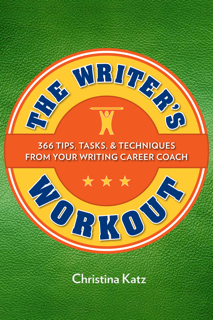
The Writer's Workout: A Q and A with Author Christina Katz


When I started freelancing more than 15 years ago, there were no blogs to help point me in the right direction. I relied on books like Writer's Market to learn about how to pitch and publish my writing. Since then, I've read dozens of books on freelancing and writing (and written a few of my own), so I was excited to do a Q and A with well-known writing instructor and coach, Christina Katz. She recently published a new book, The Writer's Workout: 366 Tips, Tasks & Techniques from your Writing Career Coach, which you'll learn more about below 

So, what’s The Writer’s Workout all about?

The Writer’s Workout contains 366 ideas—one idea per day—intended to encourage writers into prosperous action. It reviews critical skills for every writer such as improving craft, learning to sell work, how and when to specialize, ways to keep learning and growing, self-promotion from the basics through advanced topics, and how to balance traditional publication with self-publication.

What makes The Writer’s Workout different from your first two books?

Like all my books, The Writer’s Workout is a mashup of various types of writing instruction. However this book contains a distillation of my experience, my students’ collective experiences over the past decade, and the universal experience of being a writer across the ages in the form of what I hope are 366 timeless quotes. This is my third book and it differs from my first two books quite a bit in focus, objective, and format.

How is The Writer’s Workout different from other writing books already out there?

One thing that makes The Writer’s Workout unique is that the rise and fall of the how-to curve is set against the backdrop of the seasons of the year. The seasonal backdrop helped me deliver advice for writers on four levels: beginner, intermediate, seasoned pro, and veteran—each paralleling a season: spring, summer, fall, or winter. The result, I hope, is one idea every day that will help writers find and maintain literary momentum all year long in these highly distracted times.

Some people say these are tough times for writers. Others say there are opportunities around every corner. What do you say?

I say we are living in a gig economy, where professionals are stringing freelance jobs together into creative careers. We’re all doing the best we can, finding and maintaining our momentum. Not only can The Writer’s Workout assist folks who are just getting started supplementing their income with writing, it can help people who have already been writing professionally recognize that there are more opportunities to build income streams writing than any of us have realized. And then it’s just a matter of choosing the goals that will best suit your goals.

How did you come to write The Writer’s Workout?

Prior to landing the deal for this book, I was offered the opportunity to write a different book about how to be an organized writer—a topic that, unfortunately, did not feel like a good fit for the way I work.

I recommended a former student for the job and started asking myself, if not that book, then what book did I want to write? Jane Friedman, then publisher at Writer’s Digest, and I sat down in an airport restaurant after the Writer’s Digest conference in January 2010, and brainstormed the idea that evolved into The Writer’s Workout. Basically, I wanted to encapsulate everything that I’d learned from working closely with writers over ten years. Two years and many thousands of words later, here it is.

I understand your book is almost 400-pages long, yet you offer classes on writing “short stuff” and “micro-publishing.” How do you reconcile this apparent double standard?

You have to look at it this way: the book is 366 short pieces collected and placed in an order that creates a longer movement. That’s exactly how I was taught to write fiction in graduate school. This write short before you write long school-of-thought is also how I teach writers to draft and polish publishable work. We start short and then extend the jumps until, next thing you know, the writer is writing long pieces like features, e-books and even books. How? By pulling together shorter pieces to create longer pieces.

You have been called a “gentle taskmaster” by your students. What does this mean and why would writers need this kind of help?

A coach is a person who trains others to perform better. Every writer needs a kick in the pants now and then. This book has plenty of boots in the caboose and also acknowledges the challenging times we’re living in. Reading this book is like having a personal coach for your writing career, who holds you accountable to your potential, every day of the year. Get this book if you would like to have your own personal coach without the massive expense of paying for one. You’ll be your own best writing coach by the time the book is done.

Our workdays are constantly disrupted these days. What do you say to the writer who has trouble focusing and following through?

I never hear students in my training groups complaining about dramas or distractions in their lives. If something upsets their focus, it’s a major life disturbance like a trip to the emergency room, a spouse’s job loss, or a death in the family. That’s life calling, not a distraction.

Our attention can be hijacked by one hundred and one meaningless distractions per minute. I say turn up the focus and the distractions will fall away. Drama and distraction are not necessary for self-expression but they sure can impede it. I say keep the drama on the page. You can get hooked on making grounded creative progress just as you can get hooked on chasing every distraction and fanning the flames of every potential drama.

Any final comments you would like to make in closing?

At the end of the day, it does not matter if you are self-published or traditionally published, blogging or not blogging, a book-sniffer or a digital diva, a social media maven or a social media deer-in-the-headlights—what matters is that you cultivate the creativity that wants to be expressed. That’s your job. Go do it!

***Thanks to Christina for her info-packed, practical book. If you've read it, please comment and me know what you think of it!